

A frozen cube can disappear into a reef tank in seconds, but feeding more is not the same as feeding better. Mysis shrimp for reef fish is a trusted staple because it is highly palatable, nutrient-dense, and suitable for many marine species. The key is matching the shrimp size, portion, and feeding frequency to the fish in your system - while keeping excess food out of the water.
For a community reef with tangs, wrasses, clownfish, gobies, angelfish, and similar omnivores or carnivores, mysis can provide a substantial part of a varied frozen-food routine. It should not automatically become the only food you offer. Reef fish have different feeding styles and nutritional needs, and a healthy tank benefits from rotation.
Why Mysis Shrimp for Reef Fish Is So Popular
Mysis are small crustaceans with a meaty texture that encourages feeding in fish that ignore flakes or pellets. Many hobbyists turn to frozen mysis when introducing a new fish, conditioning a thin specimen, or supporting a fish that has become selective at mealtime. Its natural movement in the water column after feeding can also trigger a strong feeding response.
Mysis shrimp is valued for its protein content and naturally occurring fats. Those nutrients can support body condition, energy, and normal growth when the food is used as part of a balanced diet. Some products are enriched with vitamins, fatty acids, or color-supporting ingredients, while others focus on clean, whole shrimp with minimal processing. Read the package rather than assuming every mysis product has the same nutritional profile.
Size matters, too. Larger mysis may be an excellent meal for adult tangs, triggers, wrasses, and larger angelfish, but can be too substantial for small gobies, juvenile fish, or species with very small mouths. Finely chopped mysis or a smaller-particle frozen food can be a better fit in those tanks.
Choose a Mysis Product That Fits Your Tank
Start with the fish, not the package size. A reef tank stocked with medium to large fish can usually handle full-size mysis. A nano reef with clownfish, firefish, cardinals, and small gobies may need smaller pieces, especially if timid fish are being outcompeted during feeding.
Look for frozen food that remains solidly frozen from purchase through storage. Packaging should be intact, with no signs of repeated thawing or excessive frost buildup. A little surface frost can occur in normal freezer storage, but loose, misshapen cubes and watery packaging can indicate that the product warmed at some point.
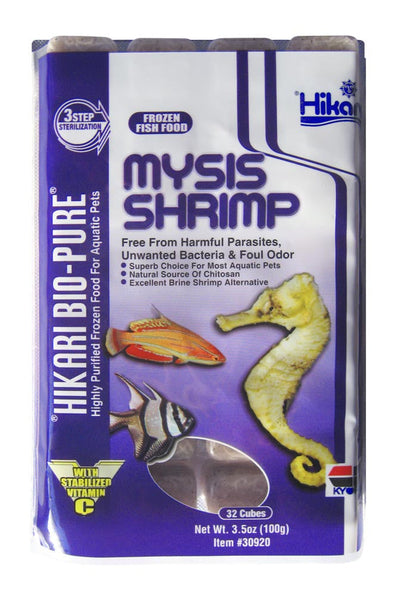
Brand selection can also be practical. Different mysis products vary in shrimp size, richness, added supplements, and pack format. Flat packs make it easy to break off a small amount, while cube packs offer consistent portions. If you feed several tanks, a larger flat pack may reduce waste. If you have one small reef, cubes can keep portion control simple.
For frozen orders, dependable cold-chain handling is part of the product decision. Pets Warehouse ships frozen food Monday through Wednesday using insulated packaging, dry ice, and Next Day Air service, backed by an arrives-frozen guarantee. Once the order arrives, move it directly into the freezer and avoid leaving it on the counter while unpacking the rest of your supplies.
How Much Mysis Should You Feed?
The right portion is the amount your fish can consume promptly without a noticeable layer of food settling in the aquarium. For many established reef tanks, that means a small amount once daily or an amount split into two lighter feedings. Active fish may need more, while lightly stocked tanks and smaller systems often need far less than hobbyists expect.
A full cube is not a universal serving size. In a 20-gallon reef with a pair of clownfish and a goby, a whole cube may be excessive. In a larger, heavily stocked community tank, it may be appropriate or even modest. Let the tank's response guide you: fish should show good body condition and interest in food, while nitrate and phosphate remain manageable under your normal maintenance routine.
Overfeeding frozen food can quickly create avoidable nutrient pressure. Uneaten shrimp breaks down, adding organics that can fuel algae and complicate water-quality control. Corals, microfauna, and scavengers may consume some leftovers, but they should not be treated as a cleanup plan for consistently oversized feedings.
Thawing Mysis Without Adding Unnecessary Waste
Remove only the portion you intend to feed. Place it in a small clean cup with a little aquarium water and allow it to thaw for a few minutes. Use a pipette, turkey baster reserved for aquarium use, or feeding tube to distribute the food where your fish can reach it.
Some reef keepers strain thawed mysis before feeding to reduce the fine liquid and particles from the package. This can be useful in tanks that are already nutrient-sensitive or prone to algae. Others feed the thawed food and liquid together because the smaller particles can benefit filter feeders and corals. Neither method is automatically right - choose based on your tank's nutrient levels, filtration, and livestock.
Avoid thawing frozen food in hot water or repeatedly refreezing what has thawed. Do not use freshwater to thaw food intended for a saltwater aquarium. These shortcuts can affect food quality and make it harder to control what enters the system.
Feed for the Fish You Keep
Mysis is especially useful for carnivorous and omnivorous reef fish, but it is not a complete replacement for every natural feeding behavior. Herbivores such as tangs and rabbitfish still need regular marine algae and vegetable-based foods. Planktivores may do best with smaller particle foods offered more frequently. Predatory fish may accept mysis readily but can require larger, more varied marine-based items as they grow.
A practical rotation might include mysis alongside brine shrimp, chopped seafood-based frozen blends, copepods, marine algae, and a quality pellet or flake appropriate to the fish. Variety helps cover nutritional gaps and keeps fish interested at feeding time. It also prevents a single rich food from becoming the source of excess nutrients in the aquarium.
Watch the Fish, Not Just the Feeding Frenzy
Eager feeding is encouraging, but it is only one signal. Observe your fish from the side several times each week. A healthy fish should generally maintain a filled-out body profile without a pinched belly, while also avoiding the overly round appearance that can come from constant heavy feeding.
Pay attention to the fish that hang back. In a busy reef, fast wrasses and tangs can take most of the mysis before shy cardinals, mandarins, gobies, or newly introduced fish have a chance. Target feeding with a baster or tube can help deliver food to the lower water column or a sheltered area. Turning off circulation pumps briefly may help, provided oxygenation and flow are restored promptly after feeding.
Keep Frozen Food Frozen Until Feeding Time
Frozen aquarium food is perishable, so storage is straightforward but worth taking seriously. Keep mysis in a consistently cold freezer, close the bag or carton securely after removing a portion, and use older packages first. If a package arrives soft or fully thawed, do not place it back into the freezer. Contact the seller promptly and retain the packaging details needed to resolve the issue.
Mysis shrimp earns its place in many reef feeding routines because fish readily recognize it as food and aquarists can control portions with precision. Start small, feed with intention, and adjust according to fish condition and water quality. That approach gives your fish a satisfying meal without asking your filtration system to clean up the difference.