

A clownfish that races to the glass, a tang that grazes all day, and a finicky wrasse that ignores pellets do not need the same menu. The best food for saltwater fish is not one product or even one food type. It is a species-appropriate feeding plan that provides protein, marine fats, algae or plant matter where needed, and enough variety to keep fish eating well without loading the aquarium with excess waste.
For most established marine aquariums, a combination of quality frozen foods and carefully selected dry foods gives the best balance of nutrition, convenience, and feeding control. The right mix depends on what your fish would eat on a reef, how active they are, and whether they are peaceful community fish, dedicated grazers, predators, or new arrivals still settling in.
What Makes the Best Food for Saltwater Fish?
Marine fish have evolved to eat highly specific diets. Some pick tiny crustaceans and zooplankton from the water column. Others browse algae from rocks throughout the day. Larger carnivores may eat fish, shrimp, squid, or other meaty prey. Feeding every fish the same flakes may keep a tank alive, but it rarely supports the best long-term color, body condition, behavior, and immune function.
Look for foods made with identifiable marine ingredients such as mysis shrimp, krill, fish meal, squid, clam, spirulina, marine algae, and plankton. A good food should match the fish's natural feeding style rather than simply being labeled for saltwater use. Size matters, too. A tiny goby cannot make much use of an oversized pellet, while a full-grown triggerfish needs more substance than a dusting of fine particles.
Frozen food is especially valuable because it offers recognizable whole-food ingredients and a broad range of textures. Dry foods, including pellets, flakes, wafers, and seaweed sheets, are useful for dependable daily feeding and for species that benefit from slow grazing. Neither category replaces the other in every tank.
Match Food to Your Fish's Natural Diet
Omnivores: the core community-tank group
Clownfish, damsels, many wrasses, cardinalfish, dottybacks, and several angelfish species are omnivores. They generally do best on a rotating diet of marine-based frozen foods, high-quality pellets or flakes, and occasional algae-containing foods.
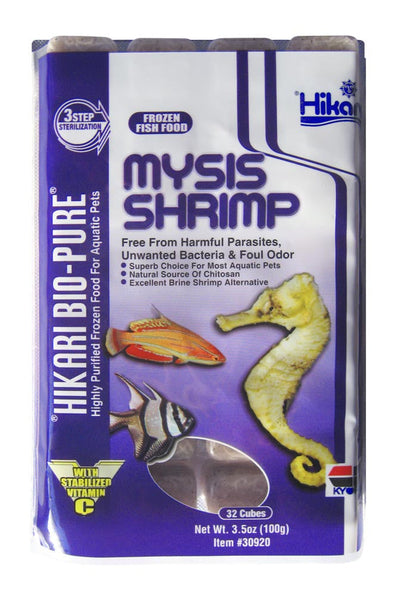
Mysis shrimp is a strong staple for many omnivores because it is protein-rich, appealing to picky eaters, and available in a size that works for a wide range of fish. Brine shrimp can add variety and encourage feeding, but it is usually best used alongside more nutrient-dense foods rather than as the only daily meal. Blended frozen formulas containing shrimp, fish, mollusks, plankton, and algae can be a practical choice for stocked community tanks.
Herbivores and grazers: tangs, rabbitfish, and algae-focused fish
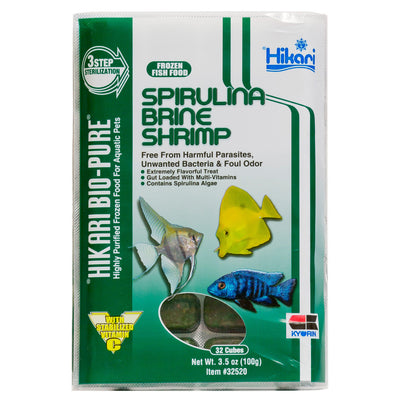
Tangs, rabbitfish, and many blennies need regular vegetable matter. Their digestive systems are designed for frequent grazing, so feeding one large meaty meal each day is not enough. Offer marine algae sheets, algae wafers, spirulina-based foods, and herbivore-focused frozen blends.
Nori and other prepared seaweed foods give active grazers something to pick at between meals. Use a secure clip and remove any large uneaten piece before it breaks apart in the tank. For tangs, variety among green, red, and brown marine algae can be helpful, especially in aquariums where natural algae growth is limited.
Herbivores may still eat mysis, pellets, and other meaty foods, but those items should not become the whole diet. A tang that eagerly eats shrimp is not necessarily getting the fiber and algae content it needs.
Carnivores and larger predators
Lionfish, groupers, eels, puffers, triggers, and other larger carnivorous species need substantial marine protein. Depending on species and size, their diet may include mysis, krill, chopped clam, squid, shrimp, scallop, and appropriately sized whole seafood-based preparations.
Variety is particularly useful for predators. Repeatedly feeding only one item can create nutritional gaps and may lead to a fish refusing anything else. Avoid relying on freshwater feeder fish. They are not a natural long-term diet for marine predators and can bring avoidable health and water-quality concerns.
Planktivores and smaller, frequent feeders
Anthias, chromis, some wrasses, and other water-column feeders often have high metabolisms. They benefit from smaller meals offered more frequently, using finely sized mysis, copepods, plankton, enriched brine shrimp, micro-pellets, and finely chopped frozen blends.
For these fish, the best food is often less about one ingredient and more about access. A large feeding once per day can leave active planktivores underfed while allowing heavier-bodied fish to take most of the meal. Smaller portions spread through the day are usually more effective.
Frozen Food vs. Dry Food in a Saltwater Aquarium
Frozen and dry foods serve different jobs. Frozen foods are often the best option when you want to provide meaty, natural ingredients and appeal to fish that are newly introduced, stressed, or selective about food. Mysis shrimp, plankton, brine shrimp, copepods, and mixed reef formulas are reliable tools for building variety into a marine diet.
Pellets and flakes are easier to portion and can be an excellent everyday choice when they are species-appropriate and accepted by the fish. Slow-sinking pellets help ensure midwater fish have time to eat, while sinking pellets or wafers are useful for bottom-oriented species. Seaweed sheets are a practical essential for grazers.
A balanced approach might use pellets for a morning feeding, a thawed frozen food in the evening, and algae sheets for herbivores as needed. That approach is not mandatory for every aquarium, but it prevents a common problem: feeding what is easy rather than feeding what the fish require.
How to Feed Frozen Saltwater Fish Food Correctly
Frozen food should arrive and remain fully frozen until use. At Pets Warehouse, frozen aquarium foods are packed in insulated packaging with dry ice and shipped Monday through Wednesday via Next Day Air under an Arrives Frozen Guarantee. Once received, transfer products promptly to the freezer.
To feed, remove only the portion you plan to use and thaw it in a small cup with aquarium water. Many keepers rinse thawed foods through a fine mesh net to reduce excess packing liquid, especially in smaller tanks or systems with nitrate and phosphate concerns. Others feed the thawed liquid as well when trying to support corals, filter feeders, or fish that benefit from finer particles. The better choice depends on your aquarium's nutrient balance.
Do not thaw and refreeze food. It affects texture and quality, and it makes portioning less predictable. For tanks with only a few fish, frozen cubes can be divided while still frozen so you are not routinely adding more food than the aquarium can process.
Feed Enough, But Not Until the Tank Suffers
Overfeeding is one of the fastest ways to turn good nutrition into poor water quality. Excess food breaks down into nutrients that can contribute to algae growth, elevated nitrate and phosphate, and lower oxygen levels. Fish may look hungry whenever someone approaches the aquarium, but that behavior is not always a request for another meal.
Start with a small amount that the fish can consume within a few minutes. Observe where the food goes. If it collects in the sand, disappears behind rockwork, or is ignored after the initial rush, reduce the portion. In a mixed reef or fish-only aquarium, feeding frequency should reflect the livestock, filtration capacity, and maintenance routine.
Most adult community fish do well with one or two measured feedings each day. Grazers may need algae available for longer periods, while anthias and other high-energy planktivores may need several small feedings. Larger predatory fish commonly require less frequent but more substantial meals. There is no universal schedule that fits every saltwater aquarium.
Signs Your Current Food Plan Needs Adjustment
Healthy fish should show steady interest in food, a filled-out body shape, clear eyes, intact fins, and normal activity for their species. Faded color, a pinched belly, lethargy, repeated food refusal, or unusual aggression at feeding time can signal that the diet, food size, or feeding schedule needs attention.
Water tests are part of the picture. If fish are in good condition but nitrate and phosphate keep rising, the answer may be smaller portions, better food capture, or stronger nutrient export rather than switching foods entirely. If fish are thin despite clean water, increase feeding frequency or offer a more calorie-dense marine food.
The most useful feeding plan is one you can maintain consistently: a varied marine diet, portions your filtration can handle, and close observation of how each fish actually eats. Let the fish, not the label alone, tell you whether the menu is working.